

The Complete Keto Food List: What to Eat, Limit, and Avoid
Navigating the Keto Grocery Store
Walking into a grocery store on your first week of keto can feel overwhelming. Every aisle seems to hold a trap. Labels that say “natural” or “whole grain” or “low fat” suddenly mean nothing, and sometimes they mean the opposite of what you want. I have been there, standing in the cereal aisle reading the back of a box and realizing that a single serving contains more carbohydrates than my entire daily limit.
That experience is exactly why we built this page.
The FuelKeto Food List is not a generic list copied from a nutrition textbook. It is a practical, kitchen-tested reference that our editorial team uses every single week. We have organized it into three clear categories: foods you can eat freely, foods that require portion awareness, and foods that will stall your progress or knock you out of ketosis entirely.
Bookmark this page. Print it out and take it to the store. Share it with your family so they understand what belongs in your kitchen. This is the reference document we wish we had when we started keto, and we built it specifically for you.
One important note before we begin: all carbohydrate counts referenced on this page are based on Net Carbs, which equals Total Carbs minus Fiber minus Sugar Alcohols. This is the standard we follow at FuelKeto across every recipe and resource we publish.
The Green Light: Foods to Enjoy Freely
These are the foods that form the foundation of your ketogenic lifestyle. They are low in carbohydrates, high in the nutrients your body needs, and safe to eat in satisfying portions without obsessive tracking. Build every meal around these categories.
Healthy Fats
Fat is your primary fuel source on keto. This is not the place to be timid. Eating enough fat is what keeps you full, supports hormone production, and sustains your energy between meals. These are the fats we use every day at FuelKeto.
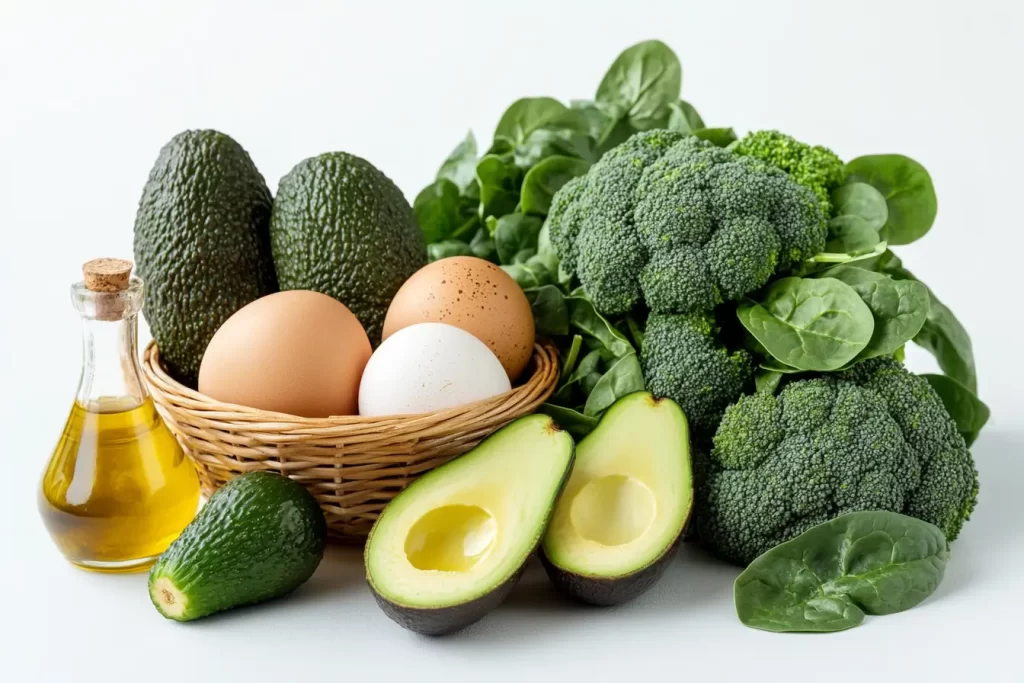
- Avocados: one of the most nutrient-dense foods on the planet, rich in potassium, fiber, and monounsaturated fats. One medium avocado contains approximately 2 grams of net carbs.
- Avocado oil: ideal for high-heat cooking with a neutral flavor profile.
- Extra virgin olive oil: best used cold or at low heat to preserve its polyphenol content. Use generously on salads and cooked vegetables.
- Coconut oil: rich in medium-chain triglycerides (MCTs), which the liver converts to ketones rapidly. A useful tool for deepening ketosis.
- MCT oil: a concentrated source of medium-chain triglycerides. Add one tablespoon to your morning coffee or smoothie for sustained mental clarity.
- Grass-fed butter: higher in omega-3 fatty acids and conjugated linoleic acid (CLA) than conventional butter. A staple in every FuelKeto kitchen.
- Ghee: clarified butter with the milk solids removed, making it suitable for those sensitive to dairy proteins. Excellent for high-heat cooking.
- Full-fat coconut cream: used in sauces, soups, and keto desserts. Always choose unsweetened varieties.
Quality Proteins
Protein on keto must be intentional. Too little and you lose muscle. Too much and you risk gluconeogenesis, a process where the liver converts excess amino acids into glucose. Aim for fatty, nutrient-dense protein sources rather than ultra-lean cuts.
- Eggs: the most versatile keto food in existence. One large egg contains less than 1 gram of net carbs and provides high-quality complete protein. Pasture-raised eggs offer superior nutritional profiles.
- Salmon: rich in omega-3 fatty acids and one of the best sources of natural vitamin D. Wild-caught Atlantic or Pacific salmon is our preference at FuelKeto.
- Sardines: an underrated keto powerhouse. High in calcium, omega-3s, and protein, with virtually zero carbohydrates.
- Mackerel and tuna: excellent fatty fish options that work well in salads, wraps, and quick weeknight meals.
- Grass-fed beef: higher in omega-3 fatty acids and CLA than grain-fed beef. Ground beef, ribeye, and brisket are particularly well-suited to keto cooking.
- Lamb: naturally fatty and deeply flavorful. Lamb chops and ground lamb are FuelKeto favorites.
- Free-range chicken thighs: we specifically recommend thighs over breasts because of their higher fat content. Chicken breast, while lean and healthy, requires additional fat sources to meet keto macro targets.
- Pork belly and bacon: choose uncured varieties with no added sugar or nitrates whenever possible.
- Canned fish: a practical pantry staple for quick meals. Always check labels for added sauces or sugars.
Low-Carb Vegetables
Vegetables are essential on keto, not optional. They provide fiber, micronutrients, and the electrolytes your body needs during the adaptation phase. Focus on vegetables that grow above ground, as these are consistently lower in carbohydrates than root vegetables.
- Spinach: approximately 0.4 grams of net carbs per cup raw. One of the most nutrient-dense foods available, rich in iron, magnesium, and folate.
- Kale: slightly higher in carbs than spinach but still very keto-friendly. Rich in vitamin K and antioxidants.
- Arugula: a peppery leafy green with less than 1 gram of net carbs per cup. Excellent as a salad base or pizza alternative.
- Romaine lettuce: crisp, mild, and extremely low in carbohydrates. A FuelKeto staple for wraps and salads.
- Zucchini: approximately 2.4 grams of net carbs per cup. Spiralized into noodles, sliced for grilling, or baked into chips.
- Cauliflower: the most versatile low-carb vegetable available. Use it as a rice substitute, mashed potato replacement, or pizza crust base.
- Broccoli: approximately 4 grams of net carbs per cup cooked. High in vitamin C and fiber.
- Asparagus: a natural diuretic that helps manage water retention during the early keto adaptation phase.
- Bell peppers: green bell peppers are the lowest in carbs at approximately 3 grams of net carbs per half cup. Red and yellow peppers are slightly higher but still acceptable in moderate portions.
- Cucumber: refreshing, hydrating, and approximately 2 grams of net carbs per cup sliced.
- Mushrooms: earthy, satisfying, and approximately 1 gram of net carbs per cup. A natural umami booster in sauces and stir-fries.
- Cabbage: underestimated and incredibly versatile. Green, red, and napa cabbage all work beautifully in keto cooking.
- Celery: one of the lowest-carb vegetables available at approximately 1.2 grams of net carbs per cup.
- Green beans: approximately 4 grams of net carbs per cup cooked. A reliable side dish that pairs well with almost any protein.
Full-Fat Dairy
Full-fat dairy products are generally well-suited to a ketogenic diet. The key word is full-fat. Low-fat and fat-free dairy products almost always contain added sugars to compensate for the loss of flavor.
- Cheddar cheese: approximately 0.4 grams of net carbs per ounce. Sharp cheddar adds bold flavor to any dish.
- Brie and camembert: soft, creamy cheeses that are nearly zero carb and pair beautifully with olives and cured meats.
- Gouda and goat cheese: versatile options that work in both savory and sweet keto preparations.
- Cream cheese: a cornerstone of keto baking and fat bomb recipes. Always choose full-fat, plain varieties.
- Heavy whipping cream: approximately 0.4 grams of net carbs per tablespoon. Used in sauces, soups, and keto coffee.
- Full-fat Greek yogurt: slightly higher in carbs (approximately 5 to 7 grams per half cup) but acceptable in small portions for those who tolerate dairy well.
The Yellow Light: Enjoy in Moderation
These foods are not off-limits on keto, but they require portion awareness. Eating them freely without tracking can quietly push you over your daily carbohydrate limit and stall your progress without you realizing why.
Berries
Berries are the only fruits we regularly include in FuelKeto recipes. They are relatively low in sugar compared to other fruits and provide valuable antioxidants and fiber. However, portions matter.
- Raspberries: approximately 3 grams of net carbs per half cup. Our top berry recommendation.
- Blackberries: approximately 3.1 grams of net carbs per half cup. Rich in vitamin C and antioxidants.
- Strawberries: approximately 4.7 grams of net carbs per half cup sliced. Delicious in moderation.
- Blueberries: approximately 8.9 grams of net carbs per half cup. The highest-carb berry on this list. Limit to a small handful as a garnish rather than a full portion.
Nuts and Seeds
Nuts are calorie-dense and easy to overeat. A small handful can be a satisfying snack. An absentminded bowl in front of the television can derail a day of careful eating.
- Macadamia nuts: the most keto-friendly nut available at approximately 1.5 grams of net carbs per ounce. High in monounsaturated fats.
- Pecans: approximately 1.2 grams of net carbs per ounce. Rich and buttery in flavor.
- Almonds: approximately 2.7 grams of net carbs per ounce. High in magnesium, which supports electrolyte balance on keto.
- Walnuts: approximately 2 grams of net carbs per ounce. One of the best plant-based sources of omega-3 fatty acids.
- Chia seeds: approximately 2 grams of net carbs per tablespoon. Excellent for keto puddings and as an egg substitute in baking.
- Flaxseeds: nearly zero net carbs due to their high fiber content. Used in keto bread and cracker recipes.
- Pumpkin seeds: approximately 1.3 grams of net carbs per ounce. Rich in magnesium and zinc.
- Cashews and pistachios: the highest-carb nuts on this list at approximately 7 to 8 grams of net carbs per ounce. Enjoy sparingly and always measure your portions.
Moderate-Carb Vegetables
- Tomatoes: approximately 3.9 grams of net carbs per half cup. Technically a fruit, but used as a vegetable in cooking. Fine in small amounts.
- Onions: approximately 5 grams of net carbs per half cup chopped. Used as a flavor base in small quantities in most FuelKeto recipes.
- Leeks and shallots: similar to onions in carb content. Use sparingly as aromatics rather than main ingredients.
- Butternut squash: approximately 8 grams of net carbs per half cup cooked. Higher in carbs but acceptable occasionally in small portions.
The Red Light: Foods That Stall Progress
These foods will prevent ketosis, spike your blood glucose, and undo your progress. At FuelKeto, none of these ingredients appear in any recipe we publish. This is not a gray area.

Sugar in Every Form
Sugar is the most direct threat to ketosis. It raises blood glucose rapidly, triggers an insulin response, and signals your body to stop burning fat immediately. The problem is that sugar appears under dozens of names on food labels.
- White sugar and brown sugar
- Honey and maple syrup
- Agave nectar and coconut sugar
- Corn syrup and high-fructose corn syrup
- Molasses and rice syrup
- Fruit juice concentrates
- Dextrose, maltose, sucrose, and fructose
None of these belong in a ketogenic kitchen, regardless of how “natural” or “unrefined” they are marketed. A tablespoon of honey contains approximately 17 grams of carbohydrates. That is nearly an entire day’s budget for someone following a strict keto protocol.
Grains and Starches
Grains are incompatible with ketosis. They are digested rapidly into glucose, causing significant blood sugar spikes followed by crashes that drive hunger and cravings.
- Wheat in all forms: bread, pasta, flour, crackers, and cereals
- White rice and brown rice
- Oats and oatmeal
- Corn and cornstarch
- Quinoa and couscous
- Potatoes and sweet potatoes
- Yams and parsnips
High-Carb Fruits
Fruit is widely perceived as healthy, and in many dietary contexts it is. On a ketogenic diet, however, the fructose content of most fruits is too high to maintain ketosis. The following fruits are strictly excluded from all FuelKeto content.
- Bananas: approximately 24 grams of net carbs per medium banana
- Mangoes: approximately 22 grams of net carbs per cup
- Grapes: approximately 26 grams of net carbs per cup
- Pineapple: approximately 19 grams of net carbs per cup
- Oranges and clementines: approximately 12 to 15 grams of net carbs each
- Apples and pears: approximately 20 to 23 grams of net carbs each
- Watermelon and cantaloupe: high in sugar despite their high water content
Legumes and Beans
Despite their reputation as health foods, legumes are too high in carbohydrates for a strict ketogenic diet. A half cup of black beans contains approximately 20 grams of net carbs. Lentils, chickpeas, kidney beans, and edamame fall into the same category.
Sweetened Beverages
- Soda and diet soda (artificial sweeteners can trigger insulin responses in some individuals)
- Fruit juices of any kind
- Sports drinks and energy drinks with sugar
- Sweetened coffee drinks and flavored lattes
- Sweetened tea and lemonade
Hidden Sugars: The Labels to Watch
One of the most important skills you will develop as a keto practitioner is reading food labels critically. The front of a package is marketing. The back of a package is information. We always read the back.
Here are the specific things I look for on every label before a product enters my cart.
Ingredient Names That Mean Sugar
Food manufacturers use over 60 different names for sugar on ingredient labels. The most common ones to watch for include: maltodextrin, dextrose, fructose, sucrose, lactose, barley malt, beet sugar, cane juice, carob syrup, ethyl maltol, fruit juice concentrate, galactose, glucose solids, golden syrup, invert sugar, malt syrup, mannose, refiner’s syrup, sorghum syrup, and treacle.
If any of these appear in the first five ingredients of a product, put it back on the shelf.
The “Low-Carb” and “Keto-Friendly” Trap
These marketing terms have no regulated definition. A product can legally call itself “keto-friendly” while containing ingredients that disrupt ketosis. Always verify the net carb count yourself rather than trusting front-of-package claims.
Sugar Alcohols: Know the Difference
Not all sugar alcohols are equal. Erythritol and xylitol have minimal impact on blood sugar and are used in some FuelKeto recipes. Maltitol, however, has a glycemic index nearly as high as regular sugar and should be avoided. It appears frequently in “sugar-free” chocolates and candies.
FuelKeto Pantry Staples
Beyond fresh ingredients, a well-stocked keto pantry makes the difference between a quick, satisfying meal and a desperate drive-through decision. These are the non-perishable items our team keeps on hand at all times.

Oils and Fats
- Extra virgin olive oil
- Coconut oil (refined for cooking, unrefined for flavor)
- Avocado oil spray for quick cooking
- MCT oil for beverages and dressings
- Ghee for high-heat applications
Keto Baking Essentials
- Almond flour (blanched, super-fine): the most versatile keto flour for baking
- Coconut flour: highly absorbent and used in smaller quantities than almond flour. The two are not interchangeable in recipes.
- Psyllium husk powder: adds structure and fiber to keto breads
- Erythritol and monk fruit sweetener: our preferred zero-glycemic sweeteners
- Baking powder (check for corn starch) and baking soda
- Pure vanilla extract with no added sugar
- Unsweetened cocoa powder and 85 percent or higher dark chocolate
Condiments and Flavor Builders
- Dijon mustard (check labels for sugar)
- Apple cider vinegar and red wine vinegar
- Tamari or coconut aminos (a lower-sodium, soy-free alternative to soy sauce)
- Hot sauce without added sugar
- Full-fat mayonnaise made with avocado oil
- Tahini (sesame paste) for dressings and sauces
Canned and Jarred Goods
- Canned salmon, sardines, and tuna in olive oil or water
- Full-fat coconut milk and coconut cream (unsweetened)
- Diced tomatoes and tomato paste (in small quantities)
- Olives: green and kalamata, both nearly zero carb
- Artichoke hearts in water
- Sugar-free bone broth for cooking and electrolyte support
Spices and Dried Herbs
- Sea salt and Himalayan pink salt
- Black pepper, smoked paprika, and cayenne
- Cumin, turmeric, and coriander
- Dried oregano, thyme, rosemary, and basil
- Garlic powder and onion powder (carb-free flavor without fresh aromatics)
- Cinnamon for keto baking and beverages
Medical Disclaimer
The information on FuelKeto is for educational and informational purposes only. A ketogenic diet involves significant metabolic changes; therefore, we strongly recommend consulting with a qualified healthcare professional or a registered dietitian before starting any new diet plan. This content is not a substitute for professional medical advice, diagnosis, or treatment. Individual results may vary. Statements on this site have not been evaluated by the Food and Drug Administration or any equivalent health authority.