

The Ultimate Keto Beginner’s Guide
Welcome to the FuelKeto Family
If you have landed on this page, something brought you here. Maybe it is the desire to lose weight, to feel more energized, or simply to stop feeling controlled by food cravings. Whatever your reason, I want you to know: you are in the right place.
My name is Maya Brooks, and I am the lead voice behind FuelKeto. Together with our dedicated editorial team, we have built this space to be more than just a recipe website. FuelKeto is a community built on one simple promise: real food, real results, and real support.

Here at FuelKeto, we do not believe in quick fixes or miracle diets. The ketogenic lifestyle is a long-term commitment to fueling your body differently, and we take that seriously. Every single recipe you find on this site has been Kitchen Tested by our team. That means we cook it, taste it, adjust it, and only publish it when it genuinely works.
We combine culinary passion with nutritional research so you never have to choose between eating well and eating right. This guide is where your journey begins. Read it carefully, save it, and come back to it often. We wrote it for you.
What Is the Ketogenic Diet Really?
Most people have heard the word “keto” but very few understand what is actually happening inside the body when you follow it. Let me break it down clearly.
Your body has two primary fuel sources: glucose (from carbohydrates) and fat. Under a standard Western diet, your body runs almost entirely on glucose. Every time you eat bread, pasta, rice, or sugar, your body converts those carbohydrates into glucose and burns it for energy. It is fast, it is easy, and your body defaults to it automatically.
The ketogenic diet changes that default setting entirely.
By drastically reducing your carbohydrate intake and replacing those calories with healthy fats, you force your body to look for an alternative fuel source. That alternative is fat. Your liver begins converting fatty acids into molecules called ketones, which your brain, muscles, and organs can use just as efficiently as glucose, and in many cases, even more efficiently.
This biological shift is the foundation of everything we do at FuelKeto. It is not a gimmick. It is human biochemistry working exactly as it was designed to.
Understanding Ketosis: The Metabolic Switch
Ketosis is the metabolic state your body enters when it is primarily burning fat for fuel instead of carbohydrates. It is the goal of the ketogenic diet, and reaching it is what separates keto from simply eating low-carb.
When you restrict carbohydrates to approximately 20 to 50 grams per day, your blood glucose levels drop. In response, your insulin levels fall as well. This drop in insulin signals your fat cells to release stored fatty acids into the bloodstream. Your liver then processes these fatty acids and produces three types of ketone bodies: acetoacetate, beta-hydroxybutyrate, and acetone.
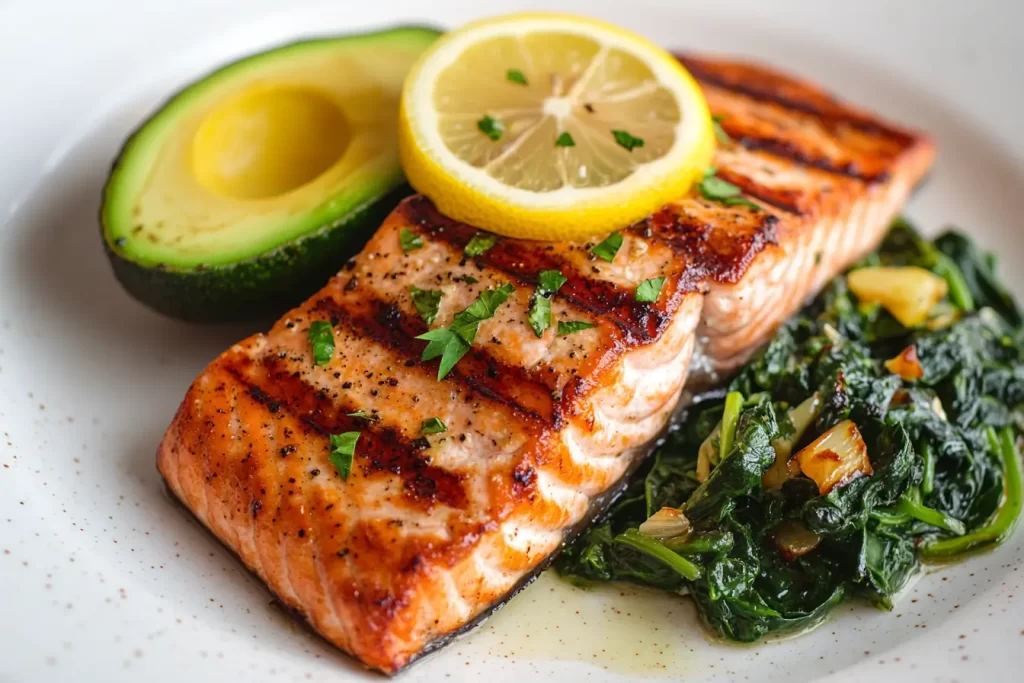
Beta-hydroxybutyrate, often referred to as BHB, is the primary ketone that circulates in your blood and feeds your brain. This is significant because the brain cannot use fat directly. It needs either glucose or ketones. When ketones become your brain’s primary fuel, most people report a noticeable improvement in mental clarity and sustained energy levels without the spikes and crashes that come with a carb-heavy diet.
You can measure ketosis using urine strips, a blood ketone meter, or a breath analyzer. Blood meters are the most accurate. A reading between 0.5 and 3.0 millimoles per liter generally indicates nutritional ketosis.
Reaching this state typically takes between two and seven days of strict carbohydrate restriction, depending on your metabolism, activity level, and previous diet.
The Keto Macros: Fats, Proteins, and the Truth About Carbs
Macronutrients, or macros, are the three categories of nutrients that provide your body with calories: fat, protein, and carbohydrates. On a standard ketogenic diet, the macro split looks like this:
- 70 percent of daily calories from healthy fats
- 25 percent of daily calories from quality protein
- 5 percent of daily calories from carbohydrates
For most people eating around 2,000 calories per day, that translates to roughly 155 grams of fat, 125 grams of protein, and just 25 grams of carbohydrates.
Now, here is something critical that confuses many beginners: the difference between Total Carbs and Net Carbs.
Total Carbs refers to every gram of carbohydrate in a food, including fiber and sugar alcohols. Net Carbs refers only to the carbohydrates that your body actually digests and that impact your blood sugar. The formula is simple:
Net Carbs = Total Carbs minus Fiber minus Sugar Alcohols
At FuelKeto, we track Net Carbs, not Total Carbs. This is the standard used by most ketogenic nutrition experts and it allows you to eat a wider variety of fiber-rich vegetables without blowing your daily limit.
Why does fat make up 70 percent of the diet? Because fat is now your fuel. This is not the fat-phobia era of the 1990s. Dietary fat does not make you fat when carbohydrates are controlled. Fat keeps you full, supports hormone production, and provides the sustained energy your body needs to thrive in ketosis.
Protein is important but must be moderate. Eating too much protein can trigger a process called gluconeogenesis, where the liver converts excess amino acids into glucose, potentially disrupting ketosis.
Your Keto Shopping List: What to Enjoy
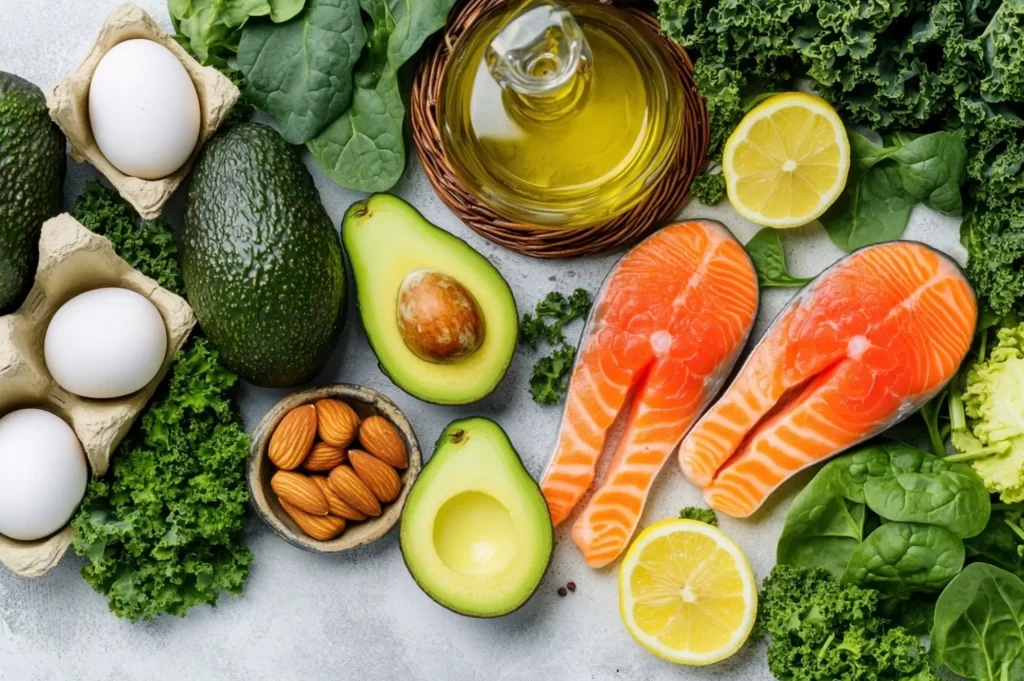
Building a keto-friendly kitchen starts with knowing exactly what belongs in your cart. Here is what we stock at FuelKeto, divided by category.
Healthy Fats
- Avocados and avocado oil
- Extra virgin olive oil
- Coconut oil and MCT oil
- Grass-fed butter and ghee
- Full-fat coconut cream
- Macadamia nuts, almonds, and walnuts
- Natural nut butters with no added sugar
Quality Proteins
- Eggs (pasture-raised when possible)
- Fatty fish: salmon, sardines, mackerel, tuna
- Grass-fed beef and lamb
- Free-range chicken and turkey (thighs over breasts for fat content)
- Bacon and pork (uncured, no added sugar)
- Full-fat cheeses: cheddar, brie, gouda, cream cheese
Low-Carb Vegetables
- Leafy greens: spinach, kale, arugula, romaine
- Zucchini, cauliflower, and broccoli
- Bell peppers and cucumber
- Asparagus, green beans, and celery
- Mushrooms and cabbage
These three categories form the backbone of every meal plan and recipe we publish on FuelKeto. When in doubt at the grocery store, ask yourself: is this mostly fat or protein, with minimal carbs? If yes, it likely belongs in your cart.
The No-Go List: Foods That Ruin Ketosis
This section is non-negotiable. At FuelKeto, we are strict about what we exclude, and we want you to understand exactly why.
Sugar in All Its Forms
White sugar, brown sugar, honey, maple syrup, agave, and corn syrup all spike blood glucose instantly. Even a small amount can knock you out of ketosis within hours. Check every label. Sugar hides in sauces, dressings, deli meats, and yogurts.
Grains and Starches
Bread, pasta, rice, oats, corn, quinoa, and potatoes are all extremely high in carbohydrates. A single slice of bread can contain 15 grams of net carbs, which is already more than half the daily limit for many keto practitioners. These foods are incompatible with maintaining ketosis.
High-Carb Fruits
Fruit is often seen as healthy, and in many diets it is. But on keto, certain fruits are simply too high in natural sugars to include regularly. We specifically avoid:
- Bananas (approximately 24 grams of net carbs each)
- Mangoes (approximately 22 grams of net carbs per cup)
- Grapes (approximately 26 grams of net carbs per cup)
- Pineapple, oranges, and apples fall into the same category
At FuelKeto, we do not use these fruits in any of our recipes. This is a firm editorial standard, not a suggestion.
Processed and Packaged Foods
Even products marketed as “low-carb” or “keto-friendly” deserve scrutiny. Always read the nutrition label. Watch for maltodextrin, dextrose, and other hidden sugars in the ingredient list.
Legumes and Beans
Lentils, chickpeas, black beans, and kidney beans are high in carbohydrates despite their protein content. They do not belong in a strict ketogenic diet.
Surviving the Keto Flu: Electrolytes and Hydration
This is one of the most important sections in this entire guide. Please read it before you start.
During the first three to seven days of keto, many people experience what is commonly called the “keto flu.” Symptoms include headaches, fatigue, brain fog, irritability, muscle cramps, and nausea. This is not a sign that keto is harming you. It is a sign that your body is adapting.
Here is what is happening: when you deplete your glycogen stores (the stored form of glucose), your kidneys begin excreting more sodium. As sodium drops, other electrolytes follow, particularly magnesium and potassium. This electrolyte imbalance is the primary cause of keto flu symptoms.
The solution is straightforward.
Sodium
Add salt generously to your food. Use quality sea salt or Himalayan pink salt. You can also drink a cup of salted broth daily during the transition phase.
Magnesium
Take a magnesium glycinate or magnesium citrate supplement, 300 to 400 mg per day. Magnesium oxide is the least effective form. Eat magnesium-rich keto foods like spinach, pumpkin seeds, and almonds.
Potassium
Eat avocados (one of the best keto-friendly potassium sources), leafy greens, and salmon. A potassium supplement of 1,000 mg per day can also help during the adaptation period.
Hydration
Drink a minimum of two to three liters of water per day. Keto is naturally diuretic, meaning your body releases water more readily. Staying hydrated is not optional.
At FuelKeto, we care deeply about your comfort during this transition. The keto flu is temporary. With proper electrolyte management, most people feel significantly better within three to five days.
Maya’s Kitchen-Tested Secrets for Success
After years of cooking keto and helping thousands of readers through this transition, I have collected a set of personal strategies that genuinely make the difference between giving up and thriving. Here are my five most effective ones.
One: Meal Prep on Sundays
The biggest threat to keto success is not temptation. It is not having something ready when you are hungry. Every Sunday, I prepare a batch of proteins (usually baked chicken thighs or ground beef), a pot of cauliflower rice, and a large green salad base. When Monday chaos hits, I am already three meals ahead.
Two: Read Every Label Before It Enters Your Cart
I do not care how “healthy” something looks on the front of the package. I always flip it over. If sugar or any form of starch appears in the first five ingredients, it goes back on the shelf. This habit alone has saved my ketosis more times than I can count.
Three: The Fat Bomb Trick for Cravings
When a sugar craving hits hard, I make a quick fat bomb: two tablespoons of almond butter, one tablespoon of coconut oil, a pinch of salt, and a few drops of vanilla extract, mixed and chilled for 20 minutes. It satisfies the craving completely and keeps me in ketosis. We have a full Fat Bombs recipe section on FuelKeto for exactly these moments.
Four: Never Go to a Restaurant Hungry
Arriving at a restaurant hungry on keto is a recipe for bad decisions. I always eat a small snack before going out, usually a handful of macadamia nuts or a boiled egg. This small habit gives me control over the menu instead of letting hunger control me.
Five: Track Your Macros for the First 30 Days
I know tracking feels tedious. But for the first month, it is essential. Use an app like Cronometer or Carb Manager. After 30 days, most people have developed an intuitive sense of their portions and no longer need to track religiously. Think of it as a temporary education, not a permanent chore.
Keto Lifestyle: Eating Out and Social Success
One of the most common fears I hear from keto beginners is this: “What do I do at restaurants or family dinners?” The answer is simpler than you think.
At Restaurants
Most menus can be navigated successfully on keto. The key is knowing what to ask for and what to swap.
- Order grilled or baked proteins, never breaded or fried in shared oil
- Ask for vegetables or a side salad instead of fries, rice, or bread
- Request sauces and dressings on the side (many contain hidden sugars)
- Choose water, sparkling water, or unsweetened iced tea as your drink
- At burger restaurants, simply ask for your burger lettuce-wrapped instead of a bun
At Family Dinners and Social Events
This is where keto gets emotionally challenging. Food is deeply tied to culture and family. I have been there.
My approach: eat before you go, bring a keto-friendly dish to share, and focus on the proteins and vegetables already on the table. You do not have to make your diet the topic of conversation. Fill your plate confidently, enjoy the company, and let the food choices speak quietly for themselves.
Over time, your family will notice your consistency, and often, their curiosity becomes your greatest opportunity to share what you have learned.
Frequently Asked Questions
Can I Eat Fruit on Keto?
Yes, but selectively. Berries are your best option: strawberries, blueberries, raspberries, and blackberries are relatively low in net carbs and can be enjoyed in small portions. Half a cup of raspberries contains approximately three grams of net carbs. Avoid bananas, mangoes, grapes, and other high-sugar fruits entirely.
Is Too Much Protein Bad on Keto?
Yes, it can be. Excess protein can trigger gluconeogenesis, a process where the liver converts amino acids into glucose. This can raise blood sugar and disrupt ketosis. Aim to keep protein at approximately 25 percent of your daily calories. Focus on fatty cuts of meat rather than lean proteins.
How Long Does It Take to Reach Ketosis?
Most people enter ketosis within two to seven days of restricting carbohydrates to under 20 to 50 grams of net carbs per day. This timeline varies depending on your metabolism, activity level, and how strictly you follow the diet. Exercise can accelerate the process by depleting glycogen stores faster.
Will I Lose Muscle on Keto?
Not if you eat sufficient protein and stay active. Ketosis is actually a muscle-sparing state because the body prioritizes ketones and fat for fuel instead of breaking down muscle tissue. Resistance training two to three times per week further protects and builds muscle while in ketosis.
Can I Drink Alcohol on Keto?
Alcohol requires careful navigation on keto. Dry wines and spirits like vodka, gin, and whiskey are the lowest in carbohydrates. Beer, sweet wines, and cocktails with mixers are generally too high in carbs. Be aware that alcohol tolerance often decreases significantly on keto, so drink slowly and stay hydrated.
Medical Disclaimer
The information on FuelKeto is for educational and informational purposes only. A ketogenic diet involves significant metabolic changes; therefore, we strongly recommend consulting with a qualified healthcare professional or a registered dietitian before starting any new diet plan. This content is not a substitute for professional medical advice, diagnosis, or treatment. Individual results may vary. Statements on this site have not been evaluated by the Food and Drug Administration or any equivalent health authority.